
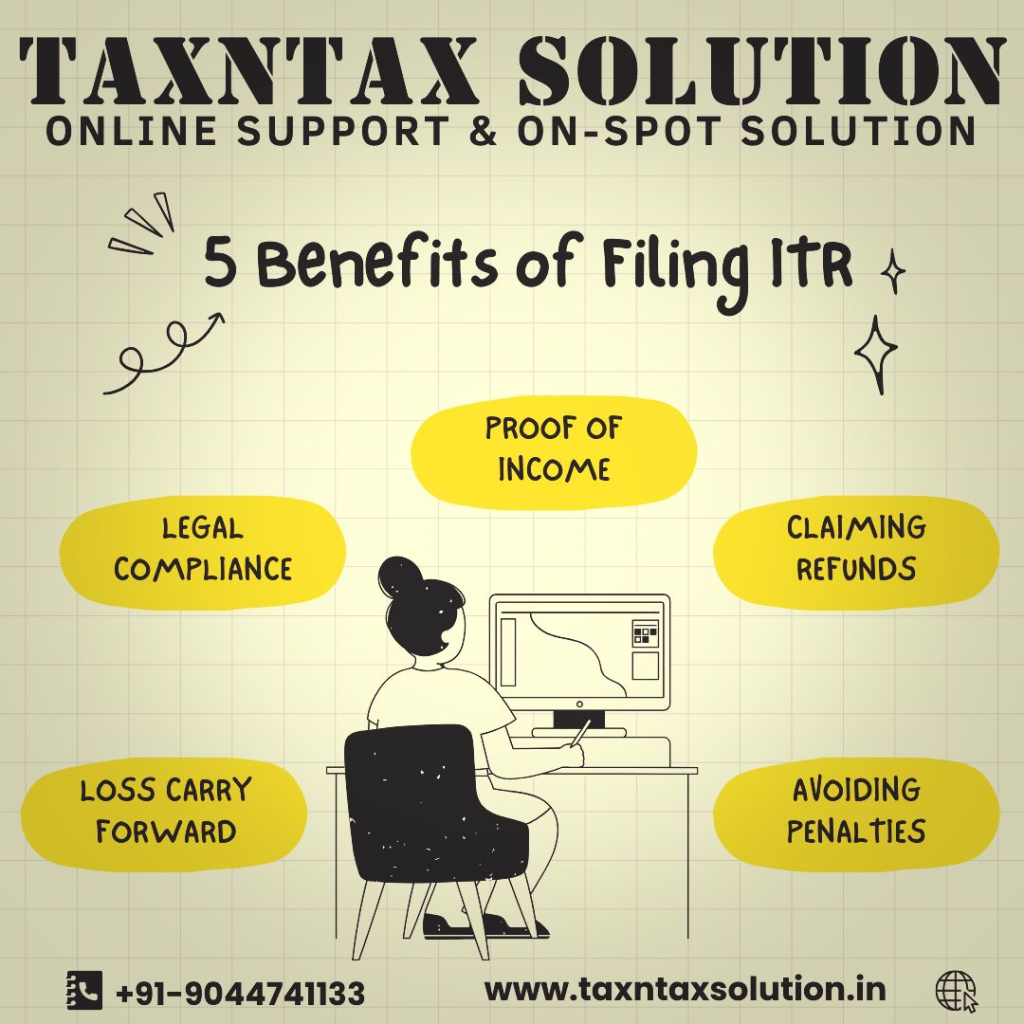
5 Benefits Of Filing Income Tax Return
Filing income tax returns is a crucial aspect of financial responsibility for individuals and businesses alike. While it might seem like a daunting task, the benefits of filing income tax returns far outweigh the challenges. Here we are going to point out the five most significant benefits of filing your income tax return:
1. Legal Compliance
One of the most fundamental reasons to file your income tax return is to ensure legal compliance. Tax laws are established by governments to collect revenue needed for public services and infrastructure. By filing your income tax return, you are adhering to these laws and fulfilling your civic duty.
Failing to file a tax return when required can lead to severe consequences. These can include fines, interest on unpaid taxes, and even legal action in extreme cases. By staying compliant, you not only avoid these negative repercussions but also contribute to the functioning and development of your country. Moreover, maintaining a clean legal record is beneficial for future financial dealings, including obtaining loans or visas, where tax compliance might be scrutinized.
2. Proof of Income
Filing an income tax return provides an official document that serves as proof of your income. This is particularly important for individuals and businesses in various situations. For instance, when applying for loans or credit, banks and financial institutions often require proof of income to assess your creditworthiness. Your income tax return can serve as a reliable document to support your application.
Similarly, when applying for visas or residency in another country, immigration authorities may require proof of income to ensure you can support yourself financially. Income tax returns can provide the necessary documentation in these cases. Additionally, maintaining a consistent record of your income through tax returns can help in verifying your earnings during disputes or clarifications with financial entities or even within family settlements.
3. Claiming Refunds
One of the more immediate and tangible benefits of filing your income tax return is the ability to claim refunds. If you have paid excess tax during the year, either through tax deducted at source (TDS), advance tax, or self-assessment tax, filing a return allows you to claim a refund for the excess amount.
Without filing a return, you forfeit this refund, essentially leaving your money with the tax authorities unnecessarily. This is particularly relevant for salaried employees where TDS is deducted from their monthly salary. Filing a return ensures that any overpayment is returned to you, providing an extra boost to your finances.
Moreover, regular refunds can help in maintaining a better cash flow throughout the year, ensuring that you are not financially strained due to overpayment of taxes. Additionally, the process of claiming refunds can sometimes highlight other areas where you might be able to save on taxes in future years through better planning and understanding of tax deductions and exemptions.
4. Loss Carry Forward
The concept of loss carry forward is a significant benefit for businesses and individuals involved in investments or business activities. When you file your income tax return, you can carry forward certain losses to offset them against future income. This can include business losses, capital losses, and even some losses under the head of income from other sources.
By carrying forward these losses, you can reduce your tax liability in future years. For example, if you incurred a significant loss in a particular financial year, you can offset this loss against profits in subsequent years, thereby lowering your taxable income and tax liability. This can be especially beneficial for businesses with fluctuating income or those in the early stages of development where initial losses are common.
Utilizing loss carry forward provisions can provide substantial long-term tax savings and improve the financial health of your business. It also encourages accurate record-keeping and financial management, as you need to document these losses and their carry forward accurately.
5. Avoiding Penalties
One of the most compelling reasons to file your income tax return on time is to avoid penalties. Tax authorities impose penalties and interest on late filing or non-filing of tax returns. These penalties can add up quickly and become a significant financial burden.
For individuals, late filing penalties can range from a flat fee to a percentage of the tax due. For businesses, the penalties can be even more severe, including interest on unpaid taxes, fines, and potential legal action. By filing your return on time, you avoid these penalties and ensure that you are not subject to any additional financial stress.
Moreover, timely filing helps in maintaining a good financial standing and reputation. It reflects positively on your financial management skills and responsibility, which can be beneficial in professional and personal financial dealings. Additionally, avoiding penalties ensures that you do not pay more than your fair share of taxes, keeping your finances in better shape.
Filing income tax returns might seem like a mundane task, but it carries significant benefits that can positively impact your financial health and legal standing. From ensuring legal compliance to providing proof of income, claiming refunds, taking advantage of loss carry forward provisions, and avoiding penalties, the advantages are clear. By understanding and leveraging these benefits, you can not only fulfill your civic duties but also enhance your financial well-being. Therefore, it is crucial to approach the process of filing income tax returns with diligence and timeliness to reap these rewards.